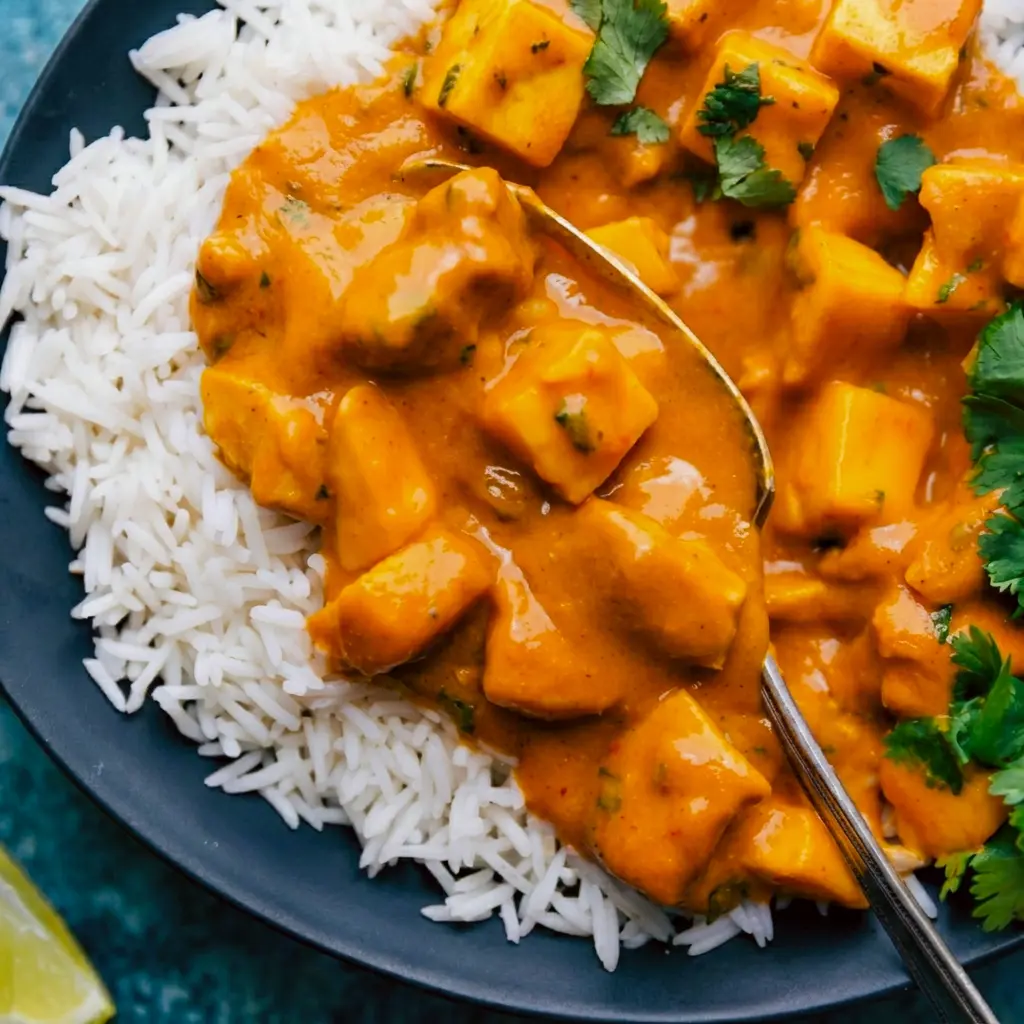
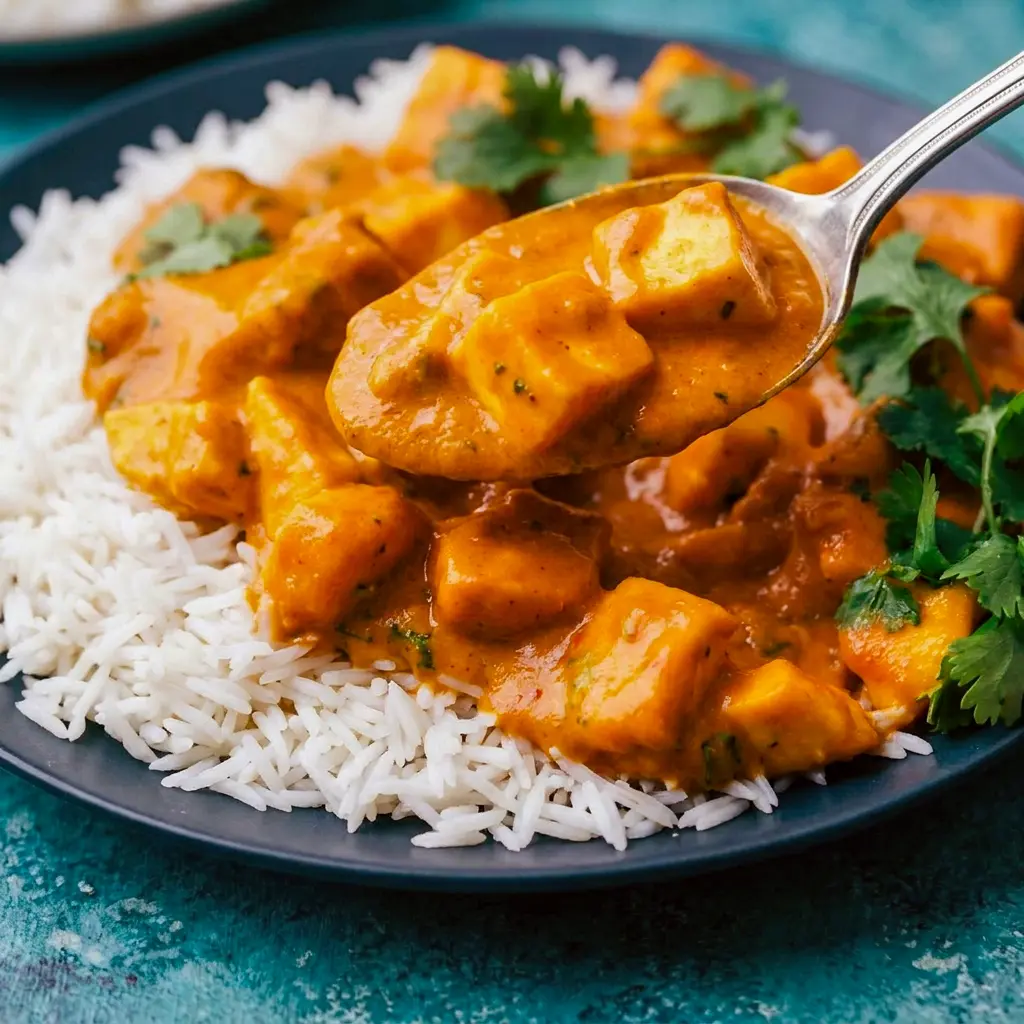
Mango Chicken Curry starts with a bright spoonful of sweetness and ends with everyone asking for the recipe. The first bite brings mango, coconut, spice, and tender chicken together in a way that feels bold but still comforting. It tastes fresh, rich, and deeply satisfying, which is exactly why Mango Chicken Curry earns a permanent spot in the dinner rotation.
This is the kind of meal that makes an ordinary night feel a little more interesting. Mango Chicken Curry does not shout for attention, but it absolutely gets it. The sauce tastes silky and layered, the mango adds natural sweetness, and the curry spices bring just enough warmth to keep each bite lively.
What makes Mango Chicken Curry especially fun is the balance. It gives you sweet fruit, creamy coconut, savory chicken, and fragrant spices without tipping too far in any one direction. That balance is what keeps people coming back for another bite, and then another bowl.
I love recipes that feel generous without becoming complicated. Mango Chicken Curry does exactly that. It uses familiar ingredients in a smarter, brighter way. It looks impressive, smells incredible, and tastes like you put in far more effort than you actually did.
Table of Contents
Why You’ll Love This Mango Chicken Curry
Mango Chicken Curry checks a lot of boxes at once, and it does so with real personality.
It works as a Not Spicy Curry for people who want comfort without heat. It also gives you enough flexibility to bump up the spice level for people who like more kick. That makes Mango Chicken Curry one of those rare dishes that can fit both a family table and a more adventurous dinner crowd.
The mango changes everything. It gives the curry a tropical sweetness that feels fresh instead of heavy. That is why this dish stands out among Mango Chicken Curry Recipes. It does not taste generic. It tastes like a deliberate, thoughtfully built dinner.
The texture matters too. Mango Chicken Curry stays creamy and spoonable, but the mango pieces add little bursts of flavor that keep the sauce interesting. That combination of blended mango and fresh mango gives the dish depth, not just sweetness.
This recipe also lands squarely in the world of Dinner Recipes With Mango, but it does more than simply use the fruit. It shows how mango can work beautifully in savory cooking. That same idea makes this dish feel like a clever spin on Chicken Mango dinners, only richer and more complete.
And because it cooks in one pot and comes together quickly, Mango Chicken Curry also fits the spirit of a Simple Chicken Curry. It feels special, but it does not demand a complicated prep list or a long simmering session.
It is also one of my favorite Honey Mango Recipes because ripe mango brings a creamier, sweeter flavor that blends beautifully into the sauce. Still, regular mango works just fine, so you can make Mango Chicken Curry with what you have.
The Key Ingredients (and Why You Need Them)
Below I list the main ingredients without the amounts so the printable card can handle that part. Here, I’ll explain what each ingredient brings to Mango Chicken Curry and how it helps the dish taste complete.
- Coconut oil
This gives the curry a gentle base and helps the aromatics cook evenly. It adds a subtle richness that fits Mango Chicken Curry perfectly. - Yellow onion
Onion creates the savory foundation. It softens into the sauce and gives the curry a natural sweetness. - Red bell pepper
Bell pepper adds color, freshness, and a little crunch before it softens. It keeps Mango Chicken Curry bright. - Fresh ginger
Ginger adds warmth and a clean, lively bite. It wakes up the sauce and keeps the sweetness from feeling flat. - Garlic
Garlic builds depth and makes the whole kitchen smell amazing. - Red curry paste
This brings bold Thai-style flavor and gives Mango Chicken Curry its backbone. Use a milder paste for a gentler dish or a spicier one for more heat. - Ground coriander
Coriander adds citrusy warmth and helps bridge the mango and curry flavors. - Yellow curry powder
Curry powder rounds out the sauce and gives it a classic curry flavor. - Ground cumin
Cumin adds earthiness and keeps the sweetness balanced. - Ripe mango
Mango is the star ingredient. Some gets blended into the sauce for body, and some stays in chunks for fresh bursts of flavor. - Full-fat coconut milk
Coconut milk makes the sauce creamy and luxurious. It gives Mango Chicken Curry the texture everyone loves. - Chicken thighs or breasts
Chicken makes this a full meal. Thighs stay juicy and tender, while breasts work well for a leaner option. - Cilantro, lime, fish sauce, kaffir lime leaves, and salt
These finishing touches brighten and deepen the curry. They help Mango Chicken Curry taste balanced instead of one-note. - Cooked rice
Rice gives the sauce somewhere to go and turns the curry into a complete dinner.
How to Make It
Making Mango Chicken Curry feels easy once you break it into a few clear stages. The sauce builds flavor first, then the chicken finishes cooking in that rich base.
- Start with the aromatics
Warm the coconut oil in a large pot over medium heat. Once it melts and shimmers, add the chopped onion and red bell pepper. Cook them, stirring every so often, until they soften and start to look glossy, about 7 to 9 minutes. This is the first layer of flavor in Mango Chicken Curry, so give it a little time. - Add the ginger and garlic
Stir in the minced ginger and chopped garlic. Cook for about a minute, just until everything smells fragrant. Do not rush this step. Ginger and garlic help Mango Chicken Curry taste lively instead of dull. - Toast the spices and curry paste
Add the red curry paste, coriander, curry powder, cumin, and salt. Stir constantly so the spices bloom in the hot oil and coat the onions and pepper. Let everything cook for 1 to 3 minutes. This step matters because it builds the deep flavor that makes Mango Chicken Curry so memorable. If the mixture starts to stick, lower the heat slightly and add a small splash more oil. - Blend in the first mango portion
Stir in 1 cup of the mango and cook for about a minute. This lets the fruit soften and start blending into the sauce. It gives Mango Chicken Curry that signature sweet base. - Add the coconut milk and simmer
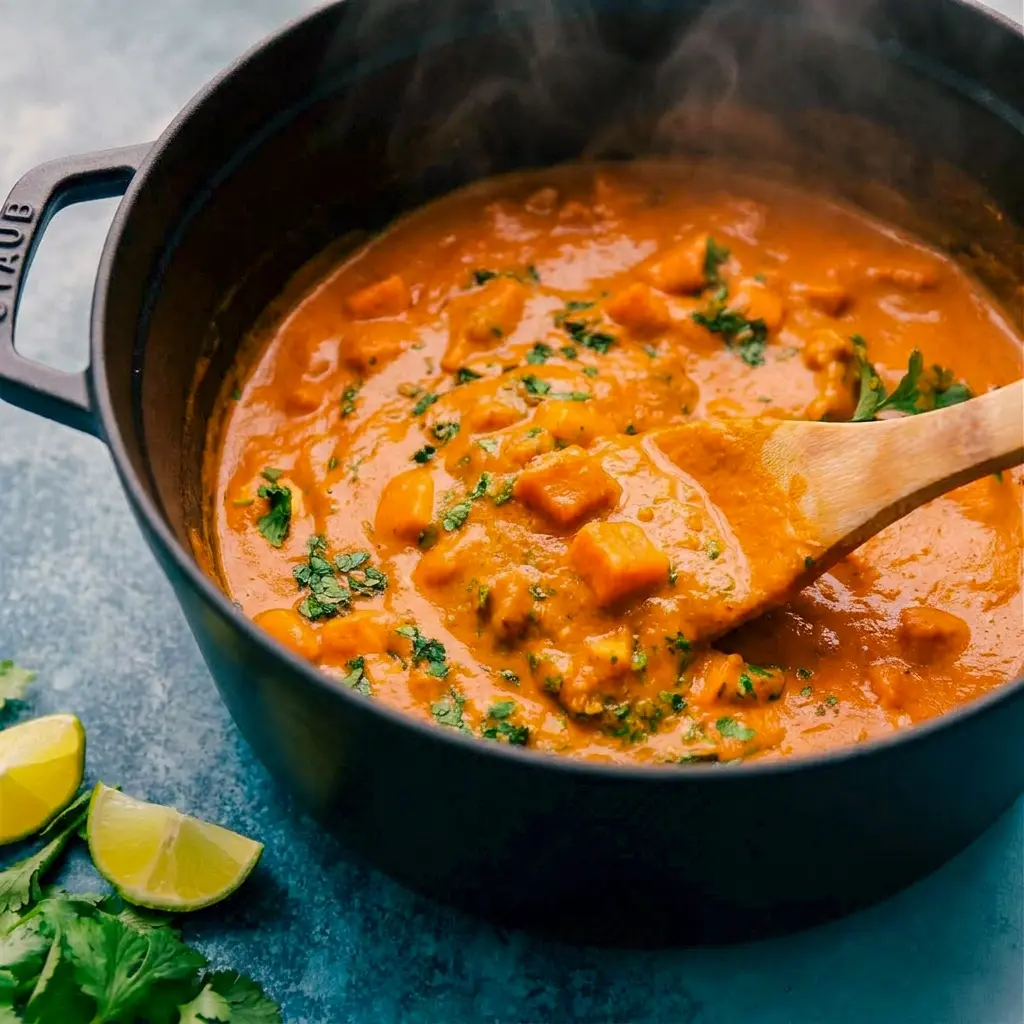
Shake the coconut milk can well before opening, then pour it into the pot. Bring the mixture to a boil over higher heat, then lower it to a gentle simmer. Let it cook for 10 to 15 minutes. This gives the flavors time to meld and makes the sauce ready for blending. At this point, Mango Chicken Curry already smells incredible. - Blend the sauce until smooth
Carefully transfer the sauce to a blender and blend until completely smooth. Use the soup or hot setting if your blender has one, and open the lid carefully because steam builds fast. Return the smooth sauce to the pot. This is what turns Mango Chicken Curry into a creamy, velvety curry instead of a chunky sauté. - Cook the chicken in the sauce
Bring the sauce back to a gentle simmer over medium-low heat. Add the chicken pieces and stir them through. Cover the pot and cook until the chicken is done, about 8 to 15 minutes depending on whether you use breasts or thighs. Thighs usually need a little longer. Check the largest piece to make sure it is cooked through. This is the stage where Mango Chicken Curry becomes a full dinner. - Finish with the remaining mango and toppings
Lower the heat and stir in the remaining mango. Add cilantro, lime zest, lime juice, fish sauce, or kaffir lime leaves if you are using them. Taste and adjust. Add more salt if needed, a little fish sauce if the curry tastes too sweet, or a touch of sugar if you want more sweetness. The final balance makes Mango Chicken Curry really sing. - Serve it hot
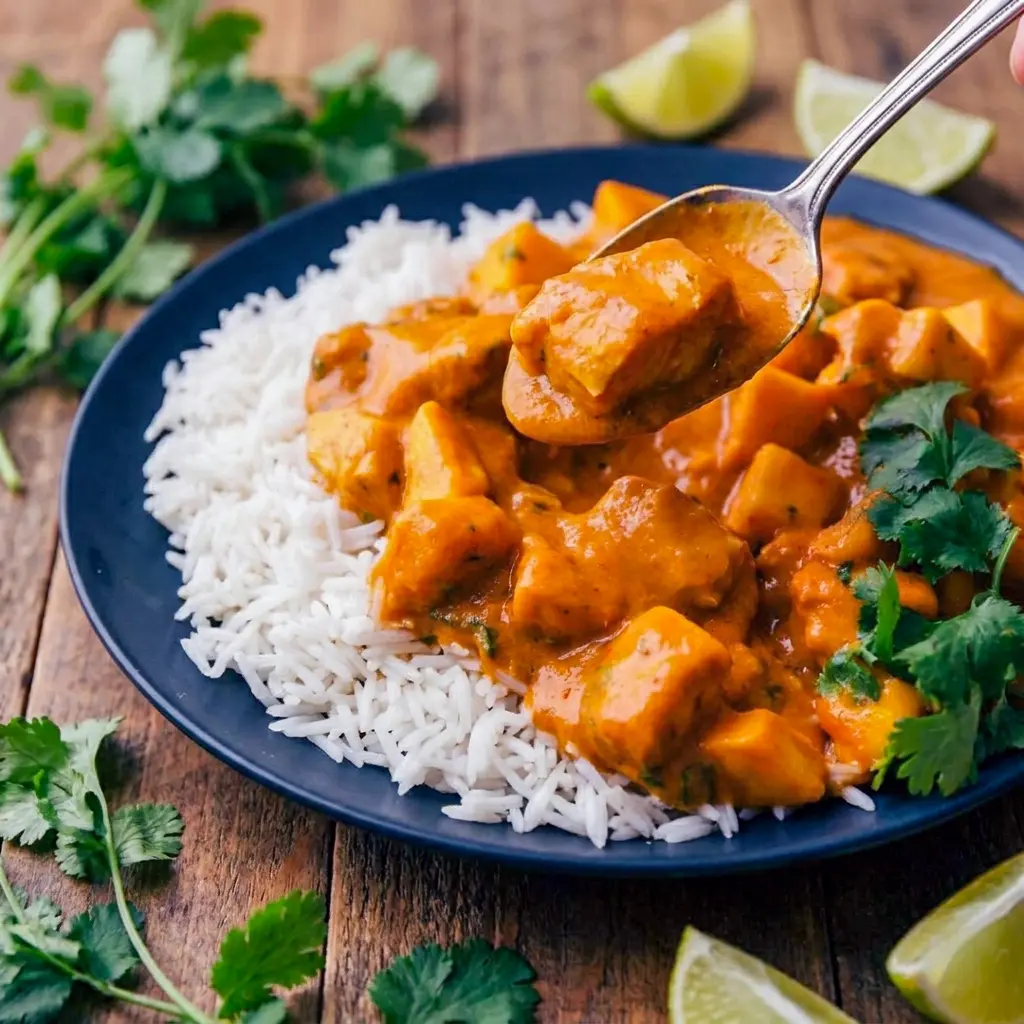
Spoon the curry over rice and finish with more cilantro on top. The rice catches the sauce and helps every bite feel complete.
Pro Tips for Perfect Mango Chicken Curry
Mango Chicken Curry gets even better when you pay attention to a few small details.
- Use ripe mango for a sweeter curry. Peak-ripe fruit gives the sauce a softer, rounder flavor. Firmer mango creates a little more bite and a slightly sharper finish.
- Use full-fat coconut milk. Thin coconut milk makes the sauce watery. Full-fat coconut milk gives Mango Chicken Curry the texture it needs.
- Cook the spices before adding the liquid. This simple move unlocks much more flavor. It helps the curry taste layered instead of flat.
- Blend carefully. Hot liquids expand fast. Keep the lid secure and open it slowly after blending.
- Taste at the end, not just the beginning. Mango changes the flavor balance, so the final adjustment matters. Mango Chicken Curry should taste sweet, savory, and lightly tangy all at once.
- Do not skip the finishing acid. Lime juice or lime zest keeps the curry bright and prevents the coconut sauce from feeling heavy.
Variations to Try
One reason Mango Chicken Curry works so well is that it adapts easily.
- For a milder version, use a gentle curry paste and reduce the red curry paste slightly. That keeps Mango Chicken Curry in Simple Chicken Curry territory and makes it especially family-friendly.
- For more heat, use a spicier red curry paste or add chili flakes. That shifts the dish closer to a Spicy Mango Curry Dish without losing the fruit-forward character.
- For a more tropical version, add a little extra mango at the end and finish with more lime. That highlights the sweetness and makes Mango Chicken Curry feel even fresher.
- For a deeper Thai-style profile, add kaffir lime leaves and Thai basil. Those ingredients give Mango Chicken Curry a brighter, more aromatic finish.
- For a more robust dinner, serve it with naan or roti instead of rice. It still works beautifully.
This is also a natural fit for Mango Indian Recipes inspiration, especially if you enjoy curries that lean into warm spice, fruit, and creamy texture.
Best Ways to Serve Mango Chicken Curry
Mango Chicken Curry loves toppings.
Cilantro adds freshness and color. Lime juice wakes up the sauce. Kaffir lime leaves add a citrus note that feels especially bright. A spoonful of coconut yogurt cools things down and adds a creamy finish. Dry-roasted cashews bring crunch and a little salt.
Roti makes a traditional and satisfying side, but toasted naan or pita works beautifully too. That is especially handy when you want an easy dinner that still feels special.
Rice remains the classic choice. It soaks up the sauce and turns Mango Chicken Curry into a full meal. Jasmine rice, basmati rice, or any fluffy white rice will do the job well.
This dish also fits neatly into dinner planning for anyone who loves Mango Curry Recipe ideas that feel both cozy and a little different. It is warm enough for cool nights, bright enough for warmer weather, and flexible enough for leftovers.
Storage and Leftovers
One of the best parts about Mango Chicken Curry is how well it keeps.
Store leftovers in an airtight container in the fridge for 3 to 5 days. Reheat gently over low heat. Add a splash of chicken stock, broth, or coconut milk if the sauce thickens too much. That brings Mango Chicken Curry back to life without drying it out.
You can also freeze it. Transfer cooled curry to an airtight container and freeze it for up to 3 months. Thaw it fully in the fridge before reheating on the stove.
Leftover Mango Chicken Curry often tastes even better the next day because the flavors settle in and deepen. That makes it one of those dishes worth planning ahead for.
FAQs
Is Mango Chicken Curry spicy?
It can be mild or moderately spicy depending on the curry paste you use. With a mild paste, Mango Chicken Curry leans sweet and creamy. With a spicier paste, it gets more kick.
Can I use frozen mango?
Yes. Frozen mango works very well in Mango Chicken Curry. It is a smart backup when fresh mango is not available.
What kind of mango is best?
Honey mangoes, also called Ataulfo or yellow mangos, work especially well because they taste sweet and creamy. Regular mangoes also work. That flexibility is one reason Mango Chicken Curry belongs in your regular meal rotation.
Can I make it ahead?
Absolutely. Mango Chicken Curry stores well and reheats beautifully. It is an excellent make-ahead dinner.
What makes this different from other curry recipes?
The mango. The blended mango in the sauce and the extra mango at the end give Mango Chicken Curry a layered sweetness that you do not get in most curry recipes.
Final Thoughts
Mango Chicken Curry is the kind of dinner that feels cheerful, comforting, and just a little unexpected. It brings together fruit, spice, coconut, and chicken in a way that tastes bright and rich at the same time.
This recipe deserves a spot among your go-to Mango Chicken Curry Recipes because it works for busy nights, family dinners, and anyone looking for something a little different from the usual weeknight chicken. It also fits beautifully into Dinner Recipes With Mango when you want a dish that feels creative without becoming complicated.
Most of all, Mango Chicken Curry delivers flavor with personality. It is sweet, creamy, fragrant, and balanced. It is easy to make, easy to love, and even easier to make again.
Follow me on Pinterest for daily new recipes.
Mango Chicken Curry | Sweet, Creamy, Not-Spicy Dinner Favorite
This Mango Chicken Curry combines tender chicken, coconut milk, curry spices, and ripe mango for a rich but bright dinner. A portion of the mango blends into the sauce, while the rest adds fresh bursts of sweetness at the end.
- Prep Time: 30 minutes
- Cook Time: 30 minutes
- Total Time: 1 hour
- Yield: 4 servings 1x
- Category: Dinner
Ingredients
- 2 tablespoons coconut oil
- 1 large yellow onion, chopped
- 1 red bell pepper, chopped
- 2 tablespoons fresh ginger, minced or coarsely chopped
- 2 tablespoons garlic, coarsely chopped
- 3 tablespoons red curry paste
- 2 teaspoons ground coriander
- 2 teaspoons yellow curry powder
- 1/2 teaspoon ground cumin
- 2 cups ripe mango, divided
- 1 (13.5-ounce) can full-fat coconut milk
- 1 1/4 pounds boneless skinless chicken thighs or breasts, cut into 1-inch pieces
- Optional additions: cilantro, lime zest, lime juice, fish sauce, kaffir lime leaves, sea salt
- Cooked rice, for serving
Instructions
- Cook the vegetables until softened.
Set a large pot over medium heat and add the coconut oil. Once it melts and heats through, add the chopped onion and red bell pepper. Stir them occasionally and let them cook until they soften and start to look glossy, about 7 to 9 minutes. This step builds the first layer of flavor for Mango Chicken Curry. - Add the ginger and garlic.
Stir in the chopped ginger and garlic and cook for about 1 minute. Keep the heat moderate so the garlic does not brown too quickly. You want the mixture fragrant and lively, not scorched. This gives Mango Chicken Curry a strong aromatic base. - Bloom the curry paste and spices.
Add the red curry paste, ground coriander, yellow curry powder, ground cumin, and salt to the pot. Stir constantly for 1 to 3 minutes so the spices toast in the oil and release their flavor. If the mixture seems to stick too much, turn the heat down slightly and add a little more coconut oil. This step gives Mango Chicken Curry its deep, layered flavor. - Add part of the mango.
Stir in 1 cup of the mango and cook for about 1 minute, stirring all the while. The mango will begin to soften and meld with the spice mixture, which helps the sauce taste naturally sweet and rounded. - Pour in the coconut milk and simmer.
Shake the coconut milk can well before opening it, then pour it into the pot. Raise the heat to bring the mixture to a boil, then lower it to a gentle simmer. Cook the sauce for 10 to 15 minutes so the flavors combine and the mango softens fully. This is where Mango Chicken Curry starts turning into a creamy curry sauce. - Blend the sauce until smooth.
Carefully transfer the hot sauce to a blender. Use the soup or hot setting if your blender has one. Secure the lid tightly because steam will build as the sauce blends. Start slowly and increase speed carefully. Remove the lid with caution after blending because hot steam will escape. Blend until the mixture looks completely smooth, then pour it back into the pot. - Cook the chicken in the sauce.
Return the pot to medium-low heat and bring the sauce back to a gentle simmer. Add the chicken pieces and stir them through so every piece gets coated. Cover the pot and cook for 8 to 15 minutes, depending on the cut you used. Chicken breasts usually finish around 8 minutes, while thighs often need closer to 15 minutes or a little longer if the pieces are larger. Check the thickest piece by cutting into it or using a thermometer; it should be fully white in the center. This is the point where Mango Chicken Curry becomes a full meal. - Add the rest of the mango and any finishers.
Lower the heat to the lowest setting and stir in the remaining 1 cup of mango. Add chopped cilantro, lime zest, lime juice, fish sauce, or kaffir lime leaves if you are using them. Taste the curry and adjust the seasoning. Add a little more salt if it needs it. If the curry tastes too sweet, add a small splash more fish sauce. If it tastes a little flat and not sweet enough, add a small amount of sugar to bring the flavors into balance. The goal is a curry that tastes bright, rounded, and complete. - Serve with rice.
Spoon the curry over cooked rice and garnish with extra cilantro if desired. Serve hot.
Notes
- Curry paste heat varies by brand.
Thai Kitchen is mild and works well for a family-friendly curry. Maesri has bolder flavor and more heat. Use the one that matches your preference and your audience. - Mango choice matters.
Honey mangos, also called Ataulfo or yellow mangos, taste especially sweet and creamy, but regular mangoes work well too. Choose ripe fruit that gives slightly when squeezed. Frozen mango also works nicely. For the second cup, chop the pieces smaller so they fit well in the finished curry. - Use full-fat canned coconut milk.
Choose shelf-stable coconut milk from the pantry aisle, not refrigerated coconut milk. Full-fat coconut milk gives the best thickness and flavor. Lite coconut milk runs thin. Cream of coconut tastes too sweet, and coconut cream feels too thick for this recipe. - Optional finishers improve the final flavor.
Fresh lime juice and zest, cilantro, fish sauce, kaffir lime leaves, and fine sea salt all help the curry taste brighter and more balanced. - Rice method included for convenience.
Rinse the rice in a fine-mesh sieve until the water runs clear. Soak it in a bowl of water for 5 to 10 minutes. Bring a large pot of water to a boil. Drain the rice and add it to the boiling water. Cook without lowering the heat for 5 to 6 minutes, then test for tenderness, drain, and fluff with a fork. This method works best for basmati rice and not for every rice variety. - Blending caution.
Hot liquids expand quickly. Secure the blender lid well, use the soup or hot cycle, and start slowly. If your blender does not have a hot setting, cover the lid with a folded towel and hold it carefully in place while blending. Open the lid slowly afterward because steam will escape. - Storage.
Keep leftovers in an airtight container in the refrigerator for 3 to 5 days. Freeze for up to 3 months. Thaw in the refrigerator before reheating.
Nutrition
- Serving Size: 1 serving
- Calories: 178kcal
- Sugar: 14g
- Sodium: 29mg
- Fat: 10g
- Carbohydrates: 18g
- Fiber: 3g
- Protein: 7g
- Cholesterol: 27mg