
Pineapple Coconut Dream Cake whisked me straight to a sunlit porch and a cold drink—one bite and you’ll know why it’s my go-to tropical crowd-pleaser. This cake is moist, laid-back, and full of bright pineapple and toasty coconut notes that somehow feel both comforting and festive.
Table of Contents
Why You’ll Fall Head Over Heels for Pineapple Coconut Dream Cake
This cake hits the sweet spot between easy weeknight baking and show-off dessert. It’s light enough to enjoy after a big meal yet rich enough to feel special. The texture stays tender without being gummy, and the coconut adds a fragrant warmth that pairs perfectly with juicy pineapple. Want to impress guests with minimal fuss? Yep — this one’s your winner.
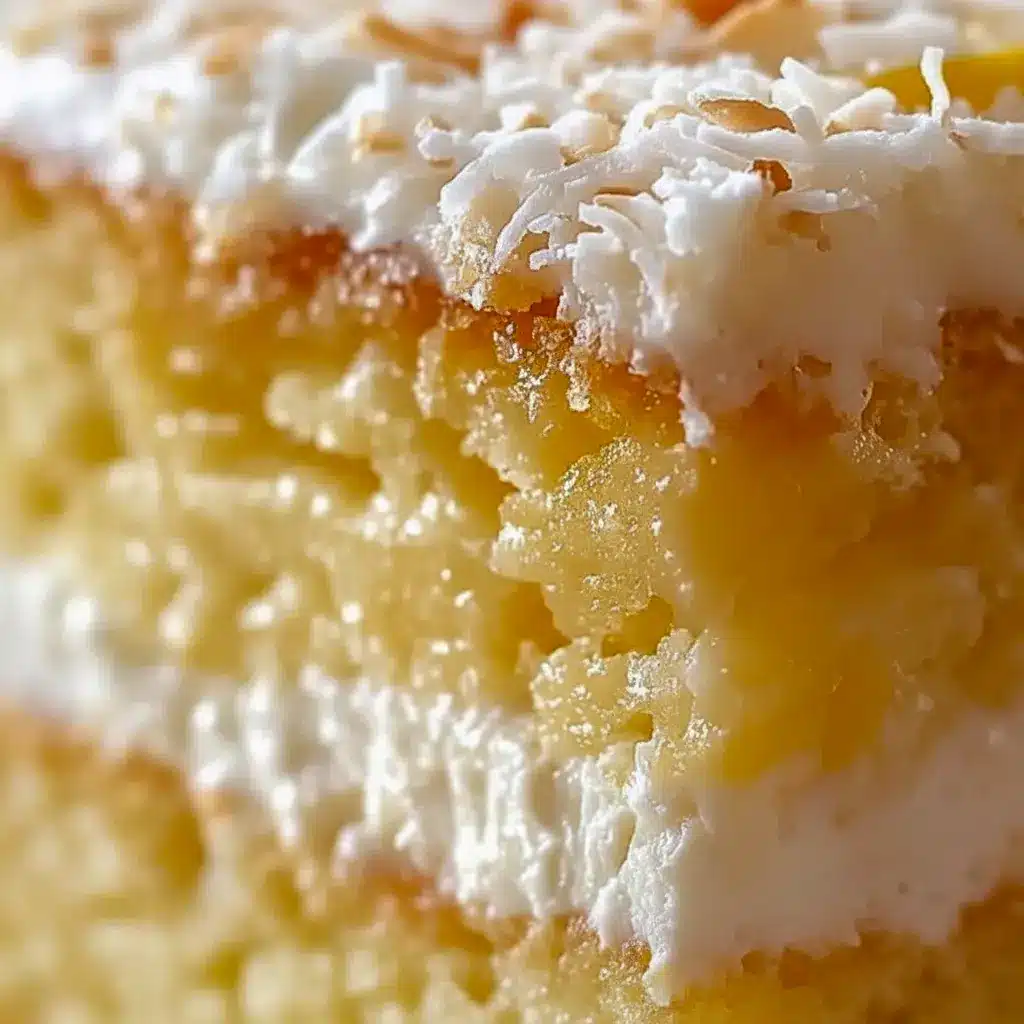
A Little Backstory
I baked this for my in-laws the first time I met them properly (not counting awkward holiday drop-bys). I wanted something simple but memorable. The result: three helpings each and polite silence followed by, “Did you make this?” That was the moment Pineapple Coconut Dream Cake earned a permanent place on my rotation.
The Key Ingredients (and Why You Need Them)
Below I list the main components (no amounts here — the printable card will have those). I’ll explain what each part does and how you can tweak the flavors.
- Flour (or swap to a gluten-free blend) — the structure-builder. Use the spoon-and-level method or a kitchen scale for consistent results.
- Sugar — sweetness plus a little tenderizing for the crumb. Brown sugar can deepen the flavor slightly.
- Coconut milk — gives the cake that subtle tropical creaminess and keeps it moist. Full-fat coconut milk delivers the richest texture.
- Eggs — lift and binding. Room temperature eggs incorporate more easily and trap air for a lighter crumb.
- Oil or melted butter — oil keeps the cake extra tender and reheats beautifully; butter gives extra flavor. Choose based on how rich you want the final cake.
- Crushed pineapple — the flavor anchor. Drain well to avoid excess moisture that could make the cake soggy.
- Baking powder — the leavening agent; fresh baking powder = better rise.
- Vanilla + coconut — aroma and depth. A touch of vanilla softens the tropical edge.
- Shredded coconut (toasted) — texture and toasty flavor; toasting brings out deeper, nutty notes.
The Pineapple Coconut Dream Cake Recipe — How to Make It
Follow this plan for a reliably moist, tropical cake with a tender crumb and toasty coconut finish.
Prep & Oven
Preheat your oven and prepare either a round cake pan or a square pan depending on whether you want slices or wedges. Grease the pan and line with parchment for the cleanest release.
Mix the Dry Ingredients
Whisk the flour, baking powder, and salt together. This makes sure the leavening distributes evenly and prevents pockets of baking powder in the finished cake.
Combine the Wet Ingredients
In another bowl, beat together the sugar and oil (or butter), then add eggs one at a time. Stir in the coconut milk and vanilla. The emulsion you create here will determine the cake’s tenderness.
Add Pineapple & Coconut
Fold in the drained crushed pineapple and shredded coconut. If you like a bolder pineapple hit, fold in a little extra pineapple juice that you’ve reduced down on the stove — but be careful: too much liquid softens the crumb too much.
Bring it Together
Gently fold the dry mix into the wet mix just until combined. Overmixing develops gluten and makes the cake tough. The batter should be slightly thick with visible flecks of coconut and pineapple.
Bake
Pour the batter into the pan and smooth the top. Bake until a toothpick inserted in the center comes out clean or with a few moist crumbs attached. The top should be golden and slightly springy.
Cool & Finish
Let the cake cool in the pan for 10-15 minutes, then transfer to a wire rack. If you’re topping it with frosting, cool completely before spreading. A light coconut whipped cream, a simple glaze, or a dusting of toasted coconut works beautifully.
Pro Tips for Perfect Results
- Always drain the pineapple well. Excess liquid is the most common cause of a soggy cake.
- Toast the coconut. A quick 5–7 minute toast in a 350°F oven transforms flavor dramatically—don’t skip it.
- Room-temp eggs and liquids mix into a smoother batter and trap air better for a lighter cake.
- Don’t overmix. Stir until the flour disappears; then stop. Overworking the batter leads to a dense result.
- Check bake time early. Ovens vary—start checking a few minutes before the recipe’s minimum time.
Variations to Try (easy swaps & upgrades)
- Coconut Rum Twist: Add a splash of dark rum or rum extract to the batter or the glaze for grown-up tropical vibes.
- Lime Zest Brightness: Fold fresh lime zest into the batter for a citrus lift that plays nicely with pineapple.
- Pineapple Upside-Down: Press pineapple rings into the bottom of the pan with a little brown sugar and bake batter on top for a nostalgic flip.
- Layer Cake: Double the recipe and create a layered cake with coconut buttercream between the tiers for celebrations.
- Gluten-free: Use a 1:1 gluten-free flour blend and follow the same steps for a gluten-free Easy Coconut Pineapple Cake.
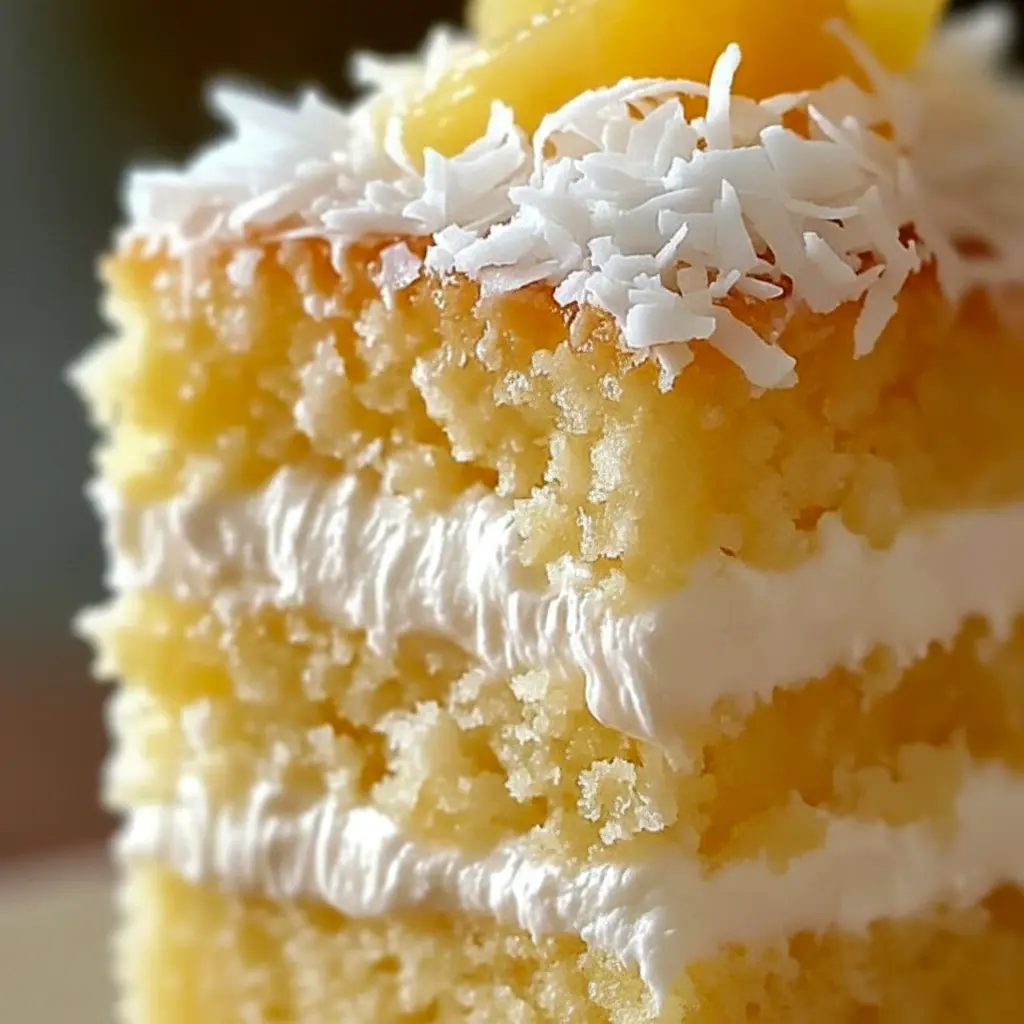
Best Ways to Serve Pineapple Coconut Dream Cake
Warm or room temperature? Both are winners. Serve a slice with a scoop of vanilla ice cream, a dollop of whipped coconut cream, or simple sweetened yogurt for contrast. For brunch, this cake pairs beautifully with strong coffee or a chilled tropical cocktail.
Storage & Make-Ahead Tips
Wrap well and refrigerate if you’ve frosted the cake with dairy-based frosting. This cake keeps for 2–3 days at room temperature if stored in an airtight container, or up to 5 days refrigerated. It also freezes well: slice and freeze single servings wrapped tightly for up to 3 months—thaw overnight in the fridge.
FAQs (quick answers to common hiccups)
My cake sank in the middle — what happened?
Likely underbaked or overmixed. Also, opening the oven door early can cause sudden temperature drops and collapse.
Can I use fresh pineapple instead of canned?
Yes — just drain it well and blot with paper towels. Fresh adds vibrancy but also more moisture.
Can I make this dairy-free?
Definitely. Use coconut milk and plant-based butter or oil; choose a dairy-free frosting for topping.
How do I get a crisper top?
Brush the top lightly with melted butter and broil for 30–60 seconds, watching closely. Or sprinkle with a little extra sugar before baking to create a slight crust.
Troubleshooting — common problems and fixes
- Dry cake: You probably overbaked it or used low-fat coconut milk. Next time reduce bake time slightly and use full-fat coconut milk.
- Soggy crumb: Drain pineapple thoroughly and pat it dry. Reduce any added liquid.
- Dense texture: Don’t overmix; ensure your baking powder is fresh.
Why This Recipe Works (a tiny bit of baking science)
The coconut milk adds fat and tenderness while the oil locks in moisture for a lasting soft crumb. Pineapple introduces natural acidity and enzymes; draining prevents enzymatic breakdown that could overly soften the crumb. A moderate amount of sugar helps with browning and moisture retention without making the cake cloying.
Serving Occasions & Pairings
This cake shines at summer BBQs, pool parties, or anytime you need a little sunshine on a plate. It’s also an excellent choice for Simple Summer Cake Ideas at potlucks. Pair slices with fruity cocktails, pineapple-forward mocktails, or a bright green salad to balance sweetness.
Final Thoughts — Make It Yours
Pineapple Coconut Dream Cake is happy to be whatever you need: a breezy weeknight dessert, a celebratory centerpiece, or a potluck showstopper. It’s forgiving, flexible, and full of flavor. Tweak the extras to match your crowd — add toasted coconut for crunch, fold in nuts for texture, or keep it minimal for a purer tropical note.
If you try this recipe, tell me what twist you chose — lime? rum? extra coconut? I love hearing about the little experiments that make family favorites even better.
Follow me on Pinterest for daily new recipes.
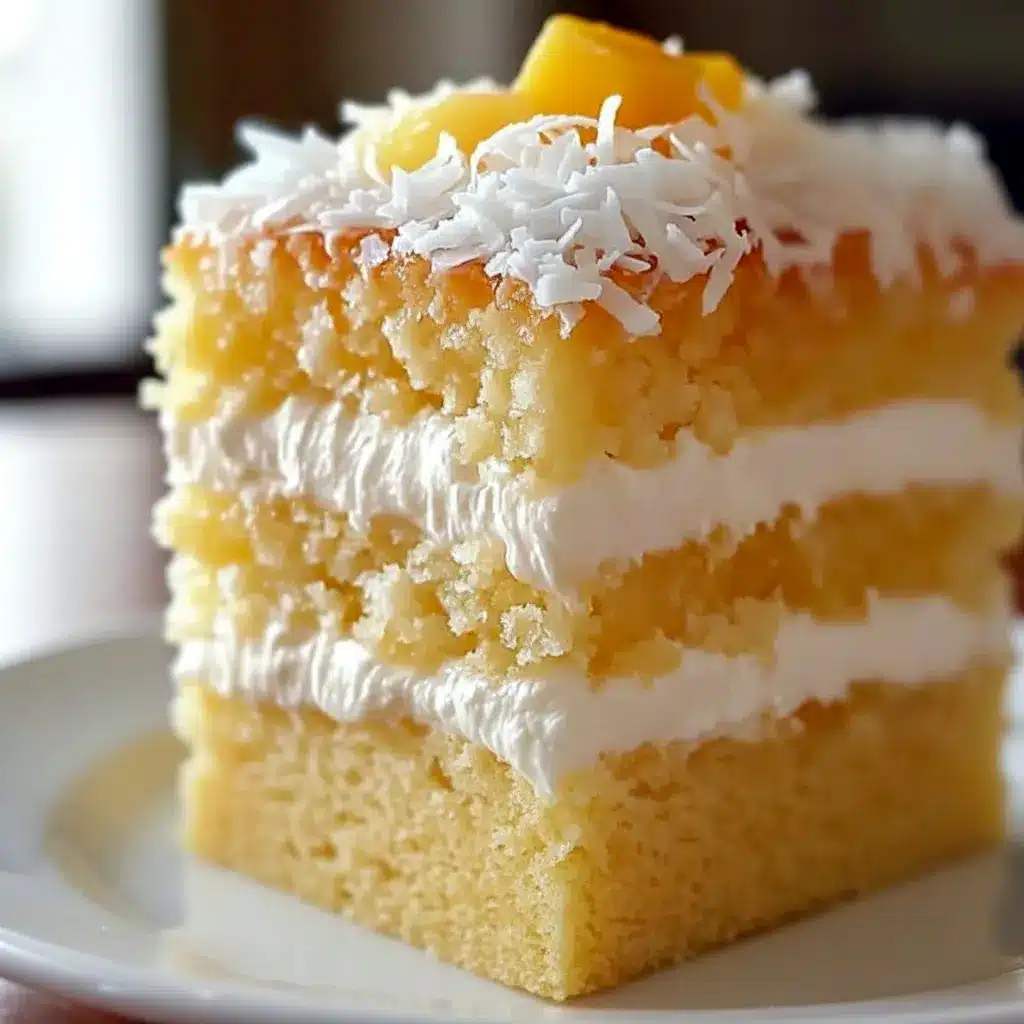
Pineapple Coconut Dream Cake – Moist & Easy Tropical Dessert

Light, tender, and sun-kissed, this Pineapple Coconut Dream Cake blends juicy pineapple and toasty coconut into a simple, crowd-pleasing loaf. It’s an easy, one-pan tropical cake that’s great for dessert, brunch, or a picnic.
- Prep Time: 20 minutes
- Cook Time: 35 minutes
- Total Time: 55 minutes
- Yield: 8 servings 1x
- Category: Dessert
Ingredients
- 1 cup plain all-purpose flour
- 1/2 cup granulated sugar
- 1/2 cup (1 stick) unsalted butter, softened to room temp
- 1/2 cup well-drained crushed pineapple
- 1/2 cup sweetened or unsweetened shredded coconut
- 2 large eggs
- 1 teaspoon baking powder
- 1/2 teaspoon vanilla extract
- Pinch of salt (optional, but recommended)
Instructions
Preheat the oven to 350°F (175°C). Butter a 9-inch round cake pan (or line it with parchment).
In a mixing bowl, beat the butter and sugar together until the texture lightens and becomes fluffy.
Add the eggs one at a time, beating after each addition, then stir in the vanilla.
In a separate bowl whisk the flour, baking powder, and a pinch of salt. Gradually fold the dry mix into the wet ingredients just until the batter is uniform — don’t overwork it.
Gently fold in the squeezed, crushed pineapple and the shredded coconut so they’re evenly distributed.
Transfer the batter to the prepared pan and smooth the top with a spatula.
Bake 30–40 minutes (start checking at 30) until a toothpick pushed into the center comes out clean or with a few moist crumbs.
Let the cake cool in the pan for 10–15 minutes, then turn it out onto a rack to cool completely before slicing.
Notes
- Quick tips
- Drain the pineapple well — excess liquid makes the crumb dense or soggy.
- Toast the coconut briefly in a dry pan for extra nuttiness, then fold most into the batter and sprinkle a little on top before baking.
- Serve warm with a scoop of vanilla ice cream or simply dusted with powdered sugar.
- Storage
- Keep wrapped at room temperature for up to 2 days or refrigerate (covered) for up to 5 days. Slices also freeze well — wrap airtight and thaw in the fridge.