King Cake Recipe — Easy Traditional Mardi Gras Favorite
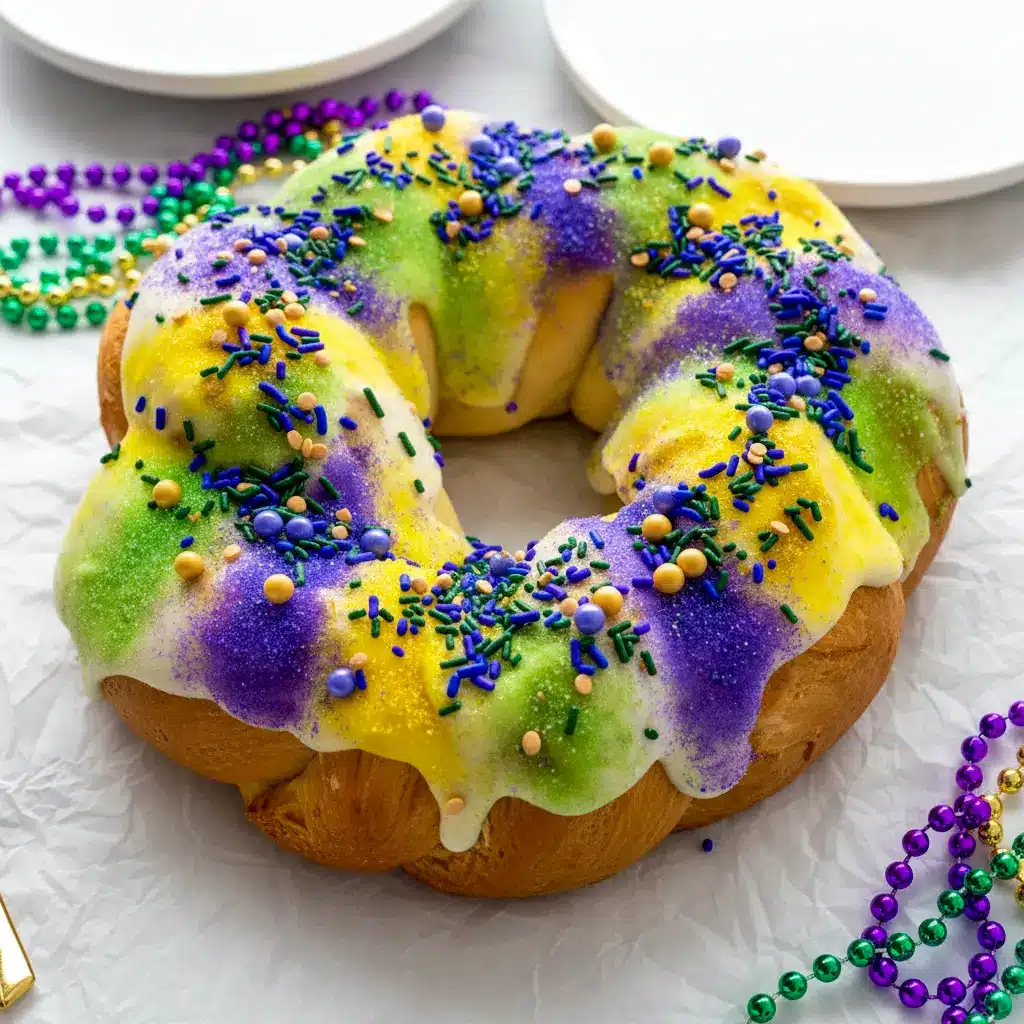
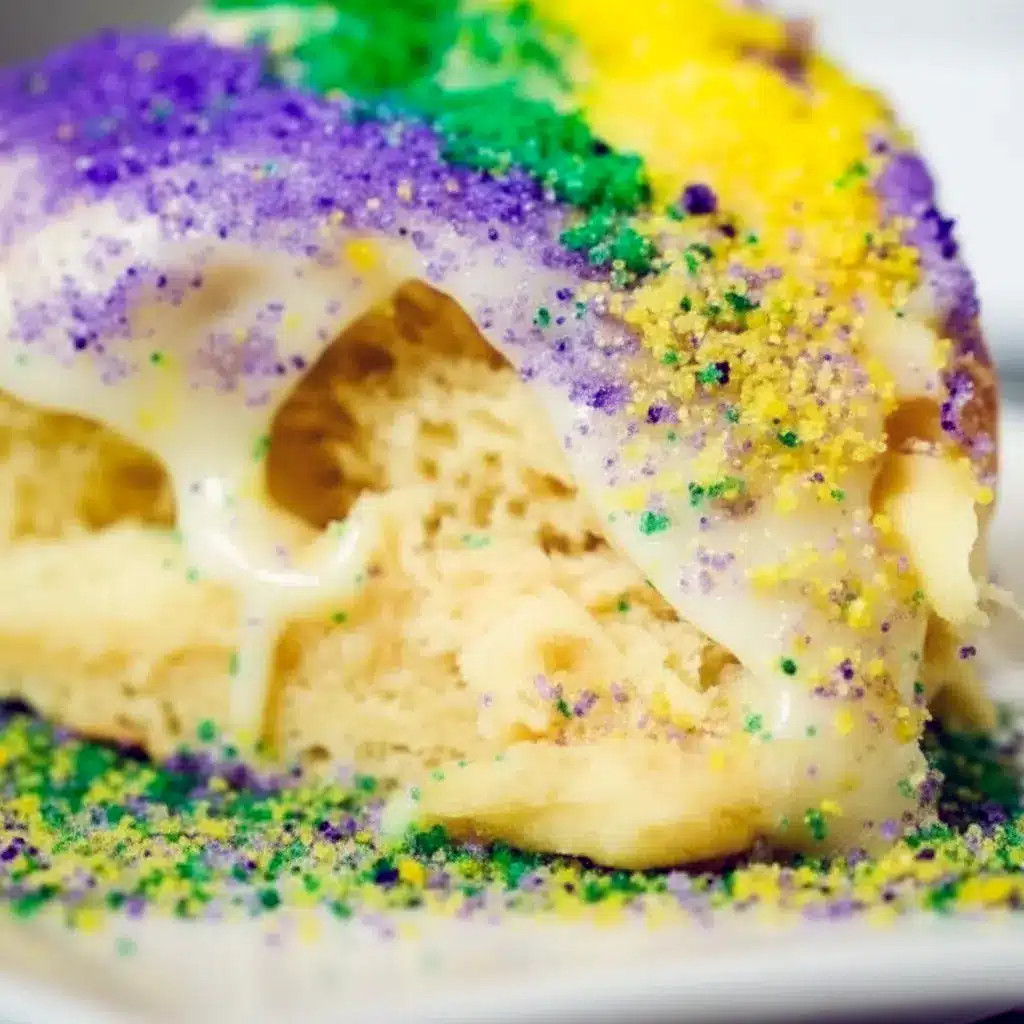
If you want a show-stopping treat for Carnival season, this King Cake Recipe delivers: soft, pillowy dough braided into a ring, lacquered with a sweet glaze, and showered in purple, green, and gold. It’s festive, nostalgic, and surprisingly straightforward — even if you’re not in New Orleans (yet).
Table of Contents
Quick intro: what this cake is and why it matters
Think of king cake as a cross between a brioche and a cinnamon roll, but shaped for celebration. The dough rises light and airy, a cinnamon-sugar ribbon runs through the middle, and the whole thing gets a glossy icing and Mardi Gras colors. It’s a ritual as much as a dessert: folks hide a tiny figurine inside and crown the finder “king for the day.” Want to throw a Mardi Gras moment at home? This Traditional King Cake Recipe makes it easy.
Why you’ll love this version
- It’s a Moist King Cake Recipe that actually stays soft for days.
- The technique is forgiving — this is a Simple King Cake Recipe even if you’re new to yeast.
- It tastes and looks like something you’d buy in New Orleans but comes from your own oven — classic Homemade King Cake Recipe vibes.
- You can pull it together as a Quick And Easy King Cake if you plan and work in batches.
- Curious how to do it right? Read on for an approachable guide to How To Make King Cake you’ll want to repeat every Carnival.
The Key Ingredients (and Why You Need Them)
Below I list the main ingredients (no amounts here — the printable card has those). I’ll explain each ingredient’s role so you know what you can tweak.
- Active dry yeast: This gives the dough lift and that tender, airy crumb. Yeast is the magic that turns a dense bread into a fluffy celebration.
- Warm water + a pinch of sugar: Feed the yeast and kickstart fermentation. The warmth wakes up the yeast; the sugar gives it something to snack on.
- Sour cream and butter: These fats keep the dough rich and tender — they’re why this turns into a Moist King Cake Recipe rather than a dry braid.
- Egg: Adds richness and helps bind; it also improves browning.
- Bread flour (or all-purpose): Provides structure. Bread flour gives extra chew; all-purpose works fine if you don’t have bread flour.
- Cinnamon + sugar (filling): The classic flavor heart. Don’t be shy — the cinnamon swirl is what gives the cake its signature warmth.
- Powdered sugar + cream cheese (or butter) glaze: The thick glaze seals the deal and gives a perfect base for the traditional purple, green, and gold sprinkles.
- Fresh or high-quality sprinkles: They’re not just decoration — they’re tradition. Purple = justice, green = faith, gold = power.
Want to swap things? Almond flour can make a gluten-free base; brown sugar adds depth to the filling; cream cheese in the glaze adds tang. But keep the essentials — yeast, fat, and the frosting — for the right result.
How to Make It
Here’s the process in friendly, actionable steps. I’ll keep things short and clear.
Make the dough
- Bloom the yeast. Stir yeast into warm water (100–110°F) with a tiny pinch of sugar. Wait until foamy — about 5–10 minutes. If nothing bubbles, your yeast may be dead; start over.
- Mix the wet ingredients. Combine sour cream, a bit of sugar, melted butter, and a lightly beaten egg in a bowl. Add the foamed yeast.
- Add the dry. Stir in flour and salt until the dough starts to come together. Use a stand mixer with a dough hook if you like — I do — but you can knead by hand.
- Knead to elasticity. Knead until the dough feels soft and elastic and pulls away from the bowl. It should be tacky but not sticky. Add small sprinkles of flour if it clings.
- First rise. Place the dough in a lightly greased bowl, cover loosely, and let it rest in a warm spot until it doubles in size (about an hour). Tip: I stick the bowl in the oven with just the light on — a sealed, slightly warm space.
Shape and fill
- Divide and roll. Punch down the risen dough, divide into two equal pieces, and roll each into a rectangle. Spread softened butter over each rectangle, then sprinkle generously with the cinnamon-sugar filling.
- Roll into logs. Tightly roll each rectangle into a log, pinch the seam to seal, and transfer seam-side down.
- Braid the ring. Lay the two logs side by side and twist them together to form a braided ring. Join the ends and tuck them under to create a neat circle. Don’t sweat perfection — rustic looks great with glaze.
- Second rise. Let the ring rest for about 20 minutes; it will puff slightly.
Bake and finish
- Bake until golden. Slide the ring into a preheated oven (325°F / 163°C) and bake until the top is golden and the internal structure sounds set (about 25–35 minutes, depending on your oven).
- Make the glaze. While the cake bakes, whisk powdered sugar with cream cheese (or butter), milk, lemon juice, and vanilla until thick but pourable. Adjust milk for consistency.
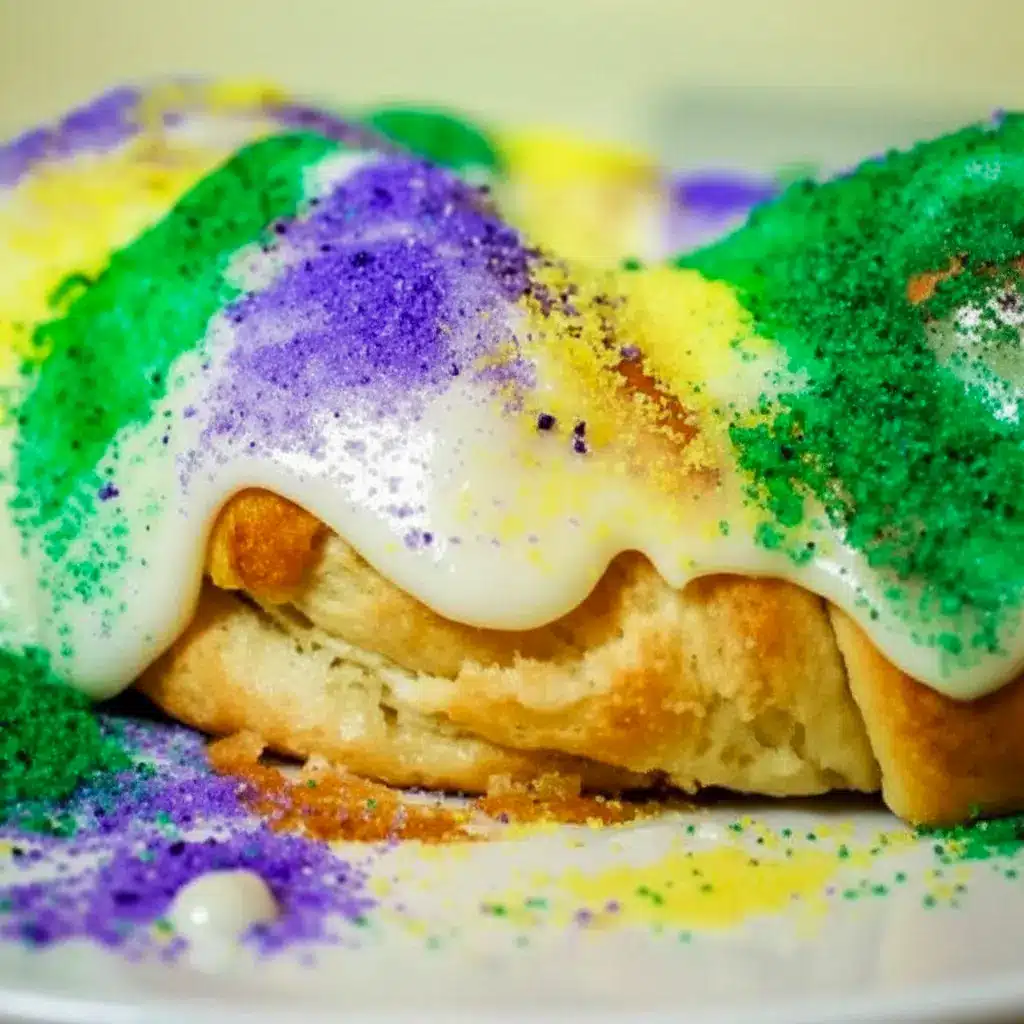
- Glaze and decorate. Pour the lusciously thick glaze over the warm cake so it drips into seams. Immediately sprinkle purple, green, and gold in alternating sections. Let the glaze set before slicing.
Pro tips for perfect results
- Use room-temperature ingredients for a smooth dough and even rise.
- Don’t rush the rise. The dough flavor deepens with time; a slower rise (cooler room) often tastes better.
- Seal the seam well after rolling the logs — this prevents the filling leaking out.
- Chill the dough briefly if it gets too soft while shaping. Cooler dough is easier to handle.
- Brush the top with an egg wash for a shiny, deep-gold finish if you like extra gloss under the glaze.
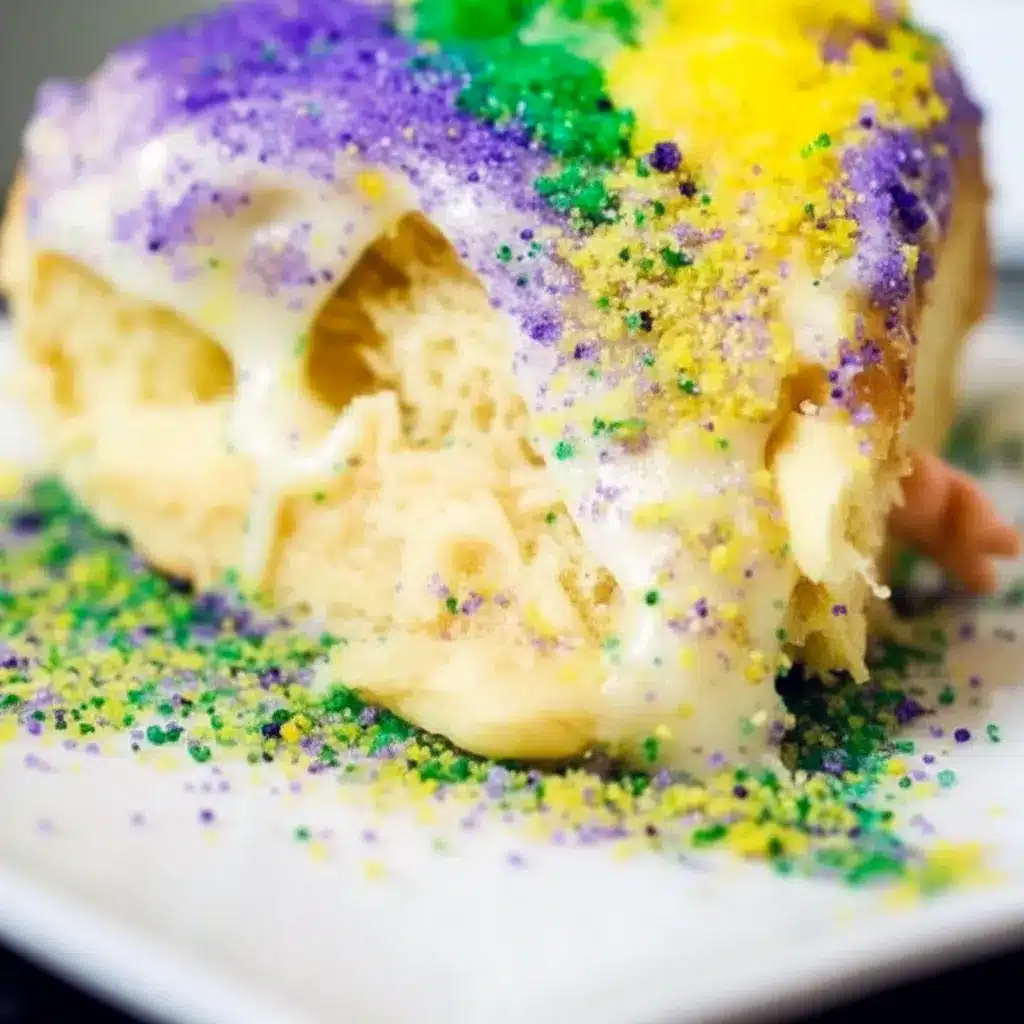
- Add the figurine after baking (if you include one). Wrap it in plastic or push into the cake from the outside to avoid choking hazards.
- Bold tip: If your kitchen is cold, use the oven-light trick to create a warm rise spot. Works every time.
Variations to try
- Cream cheese swirl: Add a sweetened cream-cheese layer with the cinnamon for a richer interior.
- Praline filling: Stir in chopped pecans and brown sugar for a Southern praline twist.
- Fruit version: Spread a thin layer of apricot or raspberry jam with the cinnamon for a fruity pop.
- Mini king cakes: Shape into individual knots or use a muffin tin for party-friendly portions.
- Gluten-free: Swap bread flour for a reliable GF blend and add xanthan gum if needed.
Best ways to serve
- Serve slightly warm or at room temperature with coffee. The texture shines when the cake isn’t ice-cold.
- Make slices, place each in a mini cupcake liner, and let guests grab their piece at a party.
- For brunch, pair with fresh fruit and strong coffee to balance the sweetness.
- Want a showstopper? Present the cake whole and let guests hunt for the hidden baby — classic Mardi Gras fun.
Quick tips for storage & leftovers
- Room temp (short term): Keep covered for up to 24 hours; the glaze may soften but the cake stays tender.
- Fridge: Store in airtight container for 3–4 days to preserve freshness. Bring to room temp before serving for best texture.
- Freeze: Wrap slices individually and freeze up to 1 month. Thaw overnight in the fridge. Reheat briefly if desired.
- Leftover idea: Toast a slice and stack with mascarpone for a decadent breakfast treat.
FAQs
Is this a quick and easy king cake?
Yes — while yeast takes time to rise, the hands-on steps are straightforward, making this a Quick And Easy King Cake in practice.
Can I make this without a stand mixer?
Absolutely. Knead by hand for 8–10 minutes until elastic. It’s a little workout, but you get great results.
Where do I put the baby?
If you use the tiny figurine, insert it after baking. Put it into the cake from the outside edge into the filling or hide it in a corner of a slice. Safety first — tell guests it’s there.
Can I make this dairy-free?
Swap the butter for dairy-free margarine and choose dairy-free cream for the glaze. Texture may shift slightly.
How to avoid a soggy bottom?
Press the crust or dough base firmly and ensure the filling isn’t too wet. Bake until set; cooling on a rack helps steam escape.
Final thoughts
This Traditional King Cake Recipe keeps the heart of New Orleans alive in your kitchen — and you don’t have to travel to feel Mardi Gras spirit. It’s a Homemade King Cake Recipe that balances tradition and ease: a tender braid of cinnamon-sweet dough, a creamy glaze, and a parade of festive colors on top. Make it for Fat Tuesday, a party, or just because the mood strikes. Seriously — who doesn’t want an excuse to throw sprinkles around?
So, ready to try How To Make King Cake at home? Gather your yeast, crank up some jazz, and let the dough rise. IMO, the best part isn’t the perfectly glossy glaze — it’s the moment you pull a warm, fragrant ring from the oven and realize you made a little bit of Carnival magic in your own kitchen.
Follow me on Pinterest for daily new recipes.
Easy Traditional King Cake Recipe
A tender, braid-shaped Mardi Gras classic: a soft, yeasted ring filled with cinnamon-sugar, finished with a rich glaze and the iconic purple, green, and gold sprinkles. This version is approachable for home bakers and makes a festive centerpiece for any Carnival celebration.
- Prep Time: 2 hours + 20 minutes
- Cook Time: 15 minutes
- Total Time: 2 hours 35 minutes
- Yield: 1 cake 1x
- Category: Dessert
- Diet: Vegetarian
Ingredients
For the dough
- Active dry yeast (¼ oz / 2¼ tsp / 1 packet)
- Warm water (about ¼ cup; 100–110°F)
- Granulated sugar (small pinch to bloom yeast + additional for dough)
- Full-fat sour cream
- Unsalted butter (some melted, some softened)
- Salt
- 1 large egg, lightly beaten
- Bread flour (3–3½ cups) — all-purpose works too
For the filling
- Softened unsalted butter
- Granulated sugar
- Ground cinnamon
For the glaze
- Powdered sugar
- Softened cream cheese (or substitute butter)
- Milk (2–4 tablespoons to loosen)
- Fresh lemon juice
- Vanilla extract
To decorate
- Purple, green, and gold sprinkles
Instructions
Activate the yeast. Whisk the yeast, a little sugar, and the warm water together in a small cup. Let it sit 5–10 minutes until foamy — that shows the yeast is alive and kicking. If it doesn’t foam, start again with fresh yeast.
Heat the dairy mix. Combine the sour cream, sugar, and some butter in a small saucepan or microwave-safe cup. Warm until the butter melts, then cool this mixture to about 100–110°F before combining with the yeast.
Make the dough. In the bowl of a stand mixer fitted with a dough hook, combine the cooled sour-cream mixture, the activated yeast, the beaten egg, and about half the flour. Mix briefly to combine.
Knead and build structure. Turn the mixer to medium, then lower to low and add the remaining flour slowly until a soft dough forms. Let the machine knead until the dough feels smooth and elastic — roughly 8–10 minutes. The dough should pull away from the bowl but not be rock-hard.
First rise. Place the dough into a lightly greased bowl, cover, and let it rise in a warm spot until doubled, about 1 hour. Tip: a warm oven with just the light on makes a reliable proofing spot.
Shape the logs. Punch down the dough and split it in two. Roll each piece into a rectangle roughly 16″ × 8–9″. Spread softened butter over each rectangle, leaving a slim border. Sprinkle generously with the cinnamon-sugar mixture. Roll each rectangle up tightly from one long edge, pinching the seam to seal.
Braid into a ring. Lay the two logs seam-side down and twist them together to form a braid. Bring the ends together and pinch well to form a circle. Transfer to a parchment-lined sheet. Let the ring rest and puff for 20–30 minutes.
Bake. Preheat the oven to 350°F. Bake the ring 25–35 minutes until golden brown and cooked through. Remove and let it cool until just warm.
Make the glaze. While the cake cools, beat the powdered sugar with cream cheese (or butter), lemon juice, vanilla, and enough milk to reach a thick but pourable consistency.
Glaze and decorate. Pour the glaze over the warm cake so it drips into the twists, then immediately scatter the purple, green, and gold sprinkles in alternating bands. Let the glaze set before slicing.
Notes
- Notes & tips
- Use room-temperature ingredients where noted for a smooth dough and even texture.
- Don’t rush the rises. Proper proofing gives you the light, pillowy crumb you want.
- If the dough gets sticky while shaping, chill briefly or dust lightly with flour — cooler dough handles easier.
- To include the traditional baby figurine, insert it after baking (wrap it first) or have someone hide it in a slice — safety first.
- This recipe originally made two cakes; the amounts here create one. Double all ingredients if you want two rings.
- Store the cake at room temperature 1–2 days or refrigerate up to 3 days. Note: sprinkles may bleed slightly into the glaze over time.
- FYI: Want variety? Fold in chopped pecans to the filling, or add a cream-cheese swirl for extra richness.